
Paul Robinson on the Future of Leadership
For organisations looking for India’s top leadership trainer and keynote speaker, Paul Robinson brings over 20 years of experience helping professionals and organisations develop stronger leadership capabilities. He is the author of High Performance Leadership and has worked with more than 350 clients globally through keynotes, workshops and leadership interventions.
As a leadership expert, keynote speaker, business strategist and leadership coach, Paul combines personal mastery, leadership mindset, emotional intelligence, strategic direction and the ability to inspire people. His sessions encourage leaders to rethink traditional assumptions and discover how leadership can be practised more effectively in everyday business situations.
To learn more about his work, visit Paul Robinson’s official website.
1. The Changing Paradigms in Leadership: From Command and Control to Warmth and Competence
For decades, leadership was commonly associated with authority. Leaders gave instructions, managers supervised execution and employees were expected to follow directions. Organisational structures reinforced the idea that the person with the highest position had the greatest influence.
This command-and-control approach may have suited environments where work was predictable, information was concentrated at the top and employees had limited autonomy. But the workplace has changed.
Today’s organisations operate in an environment shaped by technological disruption, diverse workforces, rapidly changing customer expectations and increasing complexity. Employees are often expected to think independently, collaborate across functions, solve problems and adapt quickly.
These expectations require a different kind of leadership.
Paul Robinson often expresses the idea in his keynotes through a simple observation: “Nobody wants to be led, they just want to be inspired.”
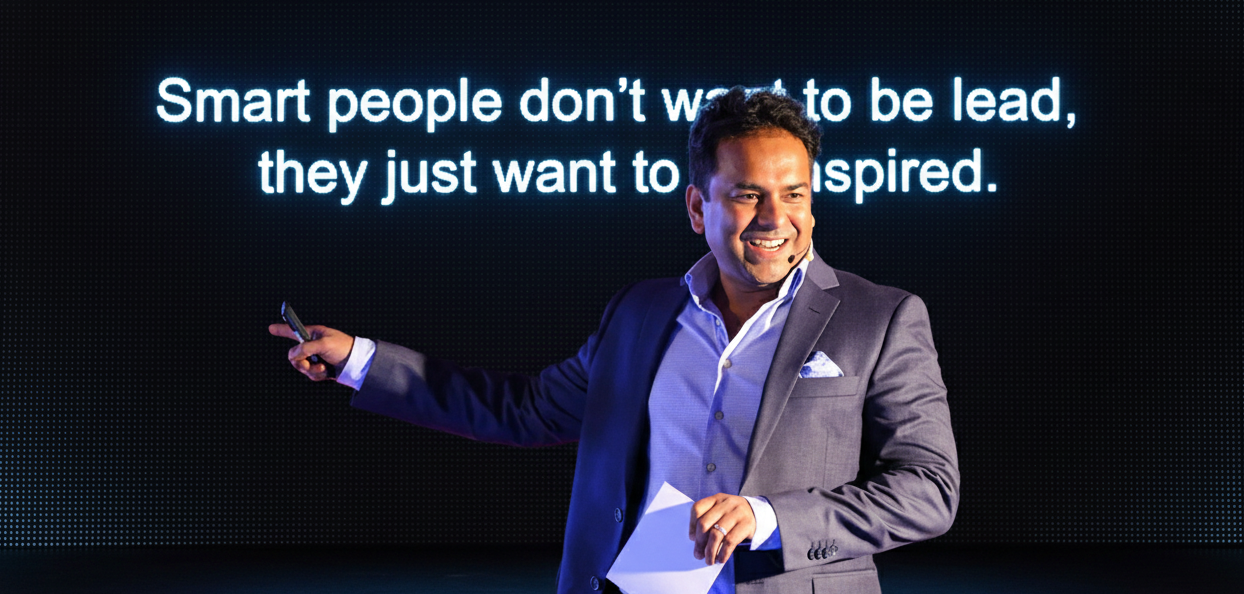
The statement captures an important distinction. People may accept a leader’s authority because of an organisational hierarchy, but genuine commitment comes from something deeper. People are more likely to contribute their best when they trust their leaders, understand the purpose of their work and feel that their contribution matters.
Why command and control is no longer enough
Command-and-control leadership relies heavily on instructions, supervision and compliance. While decisive direction remains necessary in certain situations, excessive control can discourage initiative and reduce ownership.
When employees are expected to wait for approval for every decision, organisations may lose opportunities for innovation. When people fear making mistakes, they may avoid experimentation. When leaders focus only on compliance, they may overlook the motivation, creativity and potential of their teams.
Modern leadership requires leaders to create clarity without micromanaging, establish standards without suppressing initiative, and hold people accountable without diminishing their dignity.
The importance of warmth and competence
A useful way to understand modern leadership is through two complementary dimensions: warmth and competence.
Warmth reflects how people experience a leader’s intentions. It includes empathy, approachability, respect, fairness and the ability to build trust.
Competence reflects a leader’s ability to make sound decisions, establish direction, solve problems, understand the business and deliver results.
Warmth without competence can make a leader approachable but ineffective. Competence without warmth can produce results in the short term while weakening relationships and trust.
Effective leaders need both.
They must demonstrate that they care about people while also providing clear direction and maintaining high standards. They need to listen with empathy, communicate with confidence and make difficult decisions when required.
This balance is especially important for leaders managing hybrid teams, multigenerational workforces, cross-functional projects and organisations undergoing transformation.
Paul Robinson’s leadership sessions encourage participants to examine their own leadership behaviours and consider how they can balance human connection with business effectiveness.
2. Why Organisations Need Leadership Training Today
Leadership is one of the most important influences on organisational culture, employee engagement and business performance. Yet many professionals are promoted into leadership positions because they perform well in their individual roles, without receiving adequate preparation for the responsibilities of leading others.
Technical expertise does not automatically translate into leadership capability.
A high-performing salesperson may need to learn how to coach a team. An excellent engineer may need to develop communication and conflict-management skills. A successful entrepreneur may need to learn how to delegate, build accountability and create systems that do not depend entirely on personal supervision.
This is why organisations invest in leadership training and development.
A well-designed leadership development programme can help managers and executives:
- Develop stronger communication and influencing skills.
- Build accountability without creating a culture of fear.
- Improve emotional intelligence and interpersonal effectiveness.
- Lead teams through uncertainty and change.
- Encourage collaboration and innovation.
- Create a shared vision and communicate strategic priorities.
- Identify and develop future leaders.
- Translate organisational values into everyday behaviours.
For companies looking for a leadership trainer in India for managers and executives, the challenge is to find a programme that connects leadership concepts with the situations leaders encounter at work.
Paul Robinson’s approach brings together leadership thinking, personal mastery, practical behaviours and experiential learning to help participants explore how they can become more effective in their roles.
3. Paul Robinson: Leadership Trainer, Keynote Speaker and Author
Paul Robinson has spent over 20 years helping professionals and organisations develop leadership skills. As a keynote speaker, business strategist, leadership coach and author, he works with business audiences to explore the behaviours and mindsets that contribute to effective leadership.
He is the author of High Performance Leadership, a book that reflects his interest in helping professionals strengthen their leadership capabilities and improve their effectiveness.
Over the years, Paul has delivered keynotes at leadership summits, CXO gatherings and business conferences. He has also worked with managers, professionals and business owners to develop stronger leadership capabilities.
Having served more than 350 global clients through keynotes and workshops, Paul brings experience across different organisational contexts and professional audiences.
His leadership work is built around an integrated view of leadership. It is not just about learning management techniques or understanding leadership theories. It is about developing the person behind the position, strengthening leadership behaviours and learning how to inspire people towards a shared purpose.
For organisations seeking a corporate leadership keynote speaker in India, Paul offers sessions that combine business relevance, thought-provoking ideas, storytelling, participation and practical reflection.
4. Building Accountability: Creating Ownership Instead of Compliance
Accountability is one of the most important characteristics of a high-performing organisation. Yet it is often misunderstood as the act of holding people responsible when something goes wrong.
True accountability begins much earlier.
It involves creating clarity about expectations, agreeing on responsibilities, establishing measurable outcomes and encouraging people to take ownership of their commitments.
Leaders who rely exclusively on monitoring and correcting employees may create compliance without developing genuine ownership. People may complete assigned tasks, but they may be reluctant to take initiative or address problems beyond their immediate responsibilities.
Effective leaders create an environment in which people understand what they are responsible for and feel empowered to act.
What leaders can do to strengthen accountability
Set clear expectations. People cannot be accountable for outcomes they do not understand. Leaders must communicate priorities, responsibilities and standards clearly.
Connect responsibility with authority. Assigning responsibility without providing the necessary resources or decision-making freedom can create frustration rather than ownership.
Encourage honest conversations. Teams should be able to discuss missed commitments, obstacles and mistakes without automatically resorting to blame.
Model accountability. Leaders must demonstrate the behaviours they expect from others, including acknowledging mistakes and following through on commitments.
Recognise ownership. Employees should see that taking responsibility, solving problems and contributing beyond minimum expectations are valued.
In his leadership sessions, Paul encourages leaders to consider how accountability can become part of everyday culture rather than an occasional management exercise.
For organisations looking for leadership training on accountability and ownership, this topic is particularly relevant for team leaders, middle managers, senior executives and business owners.
5. Capturing Leadership Moments at Work
Leadership is often associated with major decisions, important meetings and visible positions of authority. In reality, leadership is exercised through hundreds of small moments throughout the working day.
A manager deciding how to respond to a mistake is experiencing a leadership moment. A team member choosing to take responsibility for a problem is exercising leadership. An executive deciding whether to listen to an opposing viewpoint is demonstrating a leadership behaviour.
Paul Robinson encourages professionals to recognise these everyday opportunities to act like leaders.
Leadership is a behaviour, not just a title
Consider a team meeting where a problem has emerged. One person waits for the manager to provide a solution. Another asks the right questions, brings people together and helps the group move towards a resolution.
The second person is demonstrating leadership, regardless of their formal position.
Similarly, an employee who gives credit to colleagues, communicates difficult information honestly or supports a team member facing a challenge is contributing to a stronger leadership culture.
These moments matter because organisational culture is shaped by repeated behaviours, not simply by mission statements or values displayed on office walls.
Leadership training can help participants become more aware of these moments and recognise the choices available to them.
For companies looking for a leadership development workshop that builds leadership at every level, this approach helps move leadership away from being an exclusive responsibility of senior management.
6. Servant Leadership: Exercising Power with Humility
Leadership involves power. Leaders influence decisions, allocate resources, establish priorities and shape the working environment. The question is not whether leaders have power, but how they choose to exercise it.
Paul Robinson’s perspective is that leadership is exercising power with humility.
This idea connects closely with servant leadership, a philosophy in which leaders focus on enabling others to succeed rather than using authority primarily to advance their own status.
Servant leadership does not mean avoiding difficult decisions or lowering performance standards. It means recognising that a leader’s success depends on the effectiveness and growth of the people they lead.
What servant leadership looks like in practice
A servant leader listens before deciding, seeks to understand the challenges faced by the team and removes obstacles that prevent people from doing good work.
Such a leader shares credit, accepts responsibility, encourages development and uses authority to create opportunities for others.
For example, instead of asking only why a team missed its target, a servant leader may also ask whether expectations were clear, whether the team had the right resources and what support could improve future performance.
The objective is not to excuse poor performance. It is to understand the situation, address the underlying causes and help people succeed.
Servant leadership is particularly valuable in organisations that want to strengthen trust, employee engagement, collaboration and leadership continuity.
A servant leadership keynote speaker in India can help leaders explore how humility, accountability and high performance can coexist.
7. Leading with Emotional Intelligence
Emotional intelligence, often abbreviated as EQ, is an essential leadership capability because leadership is fundamentally a human activity.
Leaders work with people who have different motivations, experiences, expectations and emotional responses. They must communicate clearly, manage conflict, give feedback and make decisions under pressure.
Technical knowledge may help a leader understand a problem, but emotional intelligence often influences how effectively that leader works with people to solve it.
Self-awareness
Self-aware leaders recognise their emotional triggers, behavioural patterns, strengths and limitations. They understand how their communication style affects others and are willing to reflect on their impact.
Self-regulation
Leadership often involves pressure, uncertainty and difficult conversations. Self-regulation enables leaders to pause before reacting, manage frustration and respond thoughtfully rather than impulsively.
Empathy
Empathy allows leaders to understand the experiences and concerns of others. It does not require agreeing with every viewpoint; it requires listening carefully and considering perspectives before reaching a decision.
Relationship management
Leaders need to build trust, communicate expectations, resolve conflict and influence people with different priorities. Strong relationship management helps teams work together even when disagreements arise.
Emotional intelligence in difficult situations
Imagine an employee making a costly mistake. A leader who reacts with anger may create fear and discourage future transparency. A leader who ignores the mistake may weaken standards. An emotionally intelligent leader addresses the issue firmly while maintaining respect, identifying the lessons and establishing steps to prevent a recurrence.
This balance between empathy and accountability is central to effective leadership.
Paul’s leadership sessions help participants reflect on these behaviours and explore how emotional intelligence can strengthen communication, collaboration and performance.
8. Leadership and AI: Leading People in an Intelligent, Automated World
Artificial intelligence is transforming how organisations analyse information, automate work, serve customers and make decisions. As AI tools become more accessible, leadership is no longer only about managing people and processes. It increasingly involves deciding how technology should be used, where human judgement remains essential and how organisations can adapt responsibly.
The future of leadership will require a combination of technological understanding and distinctly human capabilities.
Leaders must become sense-makers
AI can generate information, identify patterns and produce recommendations. But leaders still need to determine which information matters, interpret it in context and communicate what it means for the organisation.
Sense-making involves turning complexity into clarity. It requires leaders to connect data with strategy, understand uncertainty and help people distinguish meaningful insights from distracting information.
Leaders must become decision architects
AI can support decision-making, but it does not eliminate the need for judgement. Leaders must understand the assumptions behind recommendations, recognise limitations and consider consequences that may not be captured by a model.
Decision architecture involves designing how decisions are made: what evidence is required, who should participate, which risks must be considered and where human approval is necessary.
Leaders must become stewards of trust
The use of AI raises questions about privacy, fairness, transparency, accountability and the future of work. Leaders must establish responsible practices and communicate honestly about how technology affects employees and customers.
Trust also depends on how leaders help employees navigate change. Introducing new tools without explaining their purpose or supporting people through the transition can create anxiety and resistance.
Human skills become more important
As technology takes over more routine tasks, leadership capabilities such as empathy, critical thinking, creativity, adaptability, communication and influence become increasingly valuable.
Leaders must help teams learn continuously, experiment responsibly and recognise where human insight adds value.
A leadership programme on AI should therefore go beyond tool awareness. It should help leaders consider how technology changes work, decisions, team capabilities and organisational culture.
For organisations looking for a leadership keynote speaker on AI and the future of leadership in India, this is an important area for leadership development and strategic conversation.
9. Leadership Mindset and Behaviours: From Knowing to Doing
Many professionals understand the principles of effective leadership. They know that leaders should communicate clearly, listen to employees, delegate appropriately and encourage accountability.
The challenge is putting these principles into practice consistently.
A leadership mindset influences how people interpret situations and respond to challenges. Two managers may face the same setback but react differently. One may blame the team or defend existing practices. The other may examine the facts, invite feedback and explore alternatives.
Leadership behaviour is the visible expression of that mindset.
Paul Robinson’s approach connects leadership concepts with the choices people make at work. Participants are encouraged to examine the assumptions behind their actions and consider how different behaviours could produce better outcomes.
This may involve learning to delegate rather than micromanage, asking questions rather than immediately giving instructions, giving constructive feedback rather than avoiding difficult conversations, or taking responsibility instead of shifting blame.
Leadership development becomes more meaningful when participants move from simply knowing what good leadership looks like to practising it in real situations.
10. Strategic Direction: Helping People See the Bigger Picture
A leader’s responsibility extends beyond managing daily operations. Leaders must establish direction, communicate priorities and help people understand how their work contributes to organisational goals.
Without a clear direction, teams can remain busy without making meaningful progress. Different departments may pursue competing priorities, and employees may struggle to distinguish urgent tasks from important outcomes.
Effective leaders connect the organisation’s vision with the decisions people make every day.
They explain why priorities matter, communicate trade-offs, identify opportunities and help teams understand the consequences of their choices.
Strategic leadership also involves responding to changing conditions. Leaders must be willing to question assumptions, assess emerging risks and adjust their plans when circumstances change.
For senior leaders and CXOs, these capabilities are particularly important because their decisions influence the wider organisation.
Leadership keynotes and workshops can provide a valuable setting for executives to reflect on strategic direction, leadership alignment and the behaviours required to translate strategy into action.
11. Inspiring People: The Leadership Difference
People rarely give their best simply because they have been told to do so. They are more likely to contribute when they understand the purpose of their work, trust their leaders and believe that their efforts can make a difference.
Inspiring leadership begins with clarity of purpose. Leaders need to communicate a direction that people can understand and connect with.
It also requires consistency. Employees observe whether leaders behave in ways that align with their words. A leader who talks about collaboration but rewards internal competition may struggle to build a collaborative culture.
Inspiration also involves recognising individual contributions, creating opportunities for growth and encouraging people to see possibilities beyond their current limitations.
Paul Robinson’s belief that people want to be inspired rather than merely led captures this shift from positional authority to meaningful influence.
The goal is not to make leadership a performance or a motivational speech. It is to create an environment in which people understand what matters, feel respected and are encouraged to contribute their best.
12. Experiential Leadership Training: Learning Through Participation
Leadership concepts can be explained through presentations and books, but participants often learn more deeply when they have opportunities to apply ideas, discuss situations and reflect on their own behaviour.
Paul Robinson’s leadership sessions use an experiential approach that can include activities, interactive exercises, fun games, discussions, stories and reflection.
These methods help make leadership concepts tangible. An activity involving collaboration, for example, can reveal how people communicate, distribute responsibilities, respond to uncertainty and make decisions as a team.
The facilitator can then connect the experience to workplace situations and encourage participants to consider what they would do differently.
Experiential learning can help participants:
- Recognise their own leadership habits.
- Explore alternative approaches to common challenges.
- Practise collaboration and communication.
- Reflect on accountability and decision-making.
- Connect abstract concepts with everyday work.
- Identify actions they can apply after the programme.
The objective is to make learning engaging and memorable while maintaining a clear connection to business and leadership outcomes.
For organisations looking for an interactive leadership workshop in India for managers and executives, experiential learning offers an opportunity to move beyond passive listening and encourage active participation.
13. Leadership Keynotes for CXO Summits, Conferences and Corporate Events
Leadership events provide an opportunity for organisations to bring people together around a shared theme, reinforce strategic priorities and encourage fresh conversations.
Paul Robinson has delivered keynotes at leadership summits, CXO gatherings and business conferences. His sessions can be tailored to the needs of different audiences and event formats.
Leadership summits
A leadership summit can help senior managers and executives reflect on strategy, culture, accountability and the future direction of the organisation.
CXO conferences
Senior executives face complex decisions involving growth, people, technology, culture and organisational change. A keynote can create a platform for examining leadership challenges from new perspectives.
Annual leadership meets
Annual meets can reinforce leadership expectations, align teams around priorities and encourage managers to consider how they can contribute to the organisation’s next phase of growth.
Management development programmes
For managers moving into leadership roles, training can address the transition from individual performance to leading people, delegating responsibility and developing team capabilities.
Corporate offsites and executive retreats
Offsites create space for reflection and discussion outside the pressures of everyday operations. Leadership sessions can support conversations about trust, collaboration, strategic alignment and shared responsibility.
In each case, the value of the session depends on how well it connects with the event’s purpose, audience and desired outcomes.
14. Leadership Coaching and Development for Managers and Business Owners
Keynotes can introduce powerful ideas to a large audience, while workshops and coaching-oriented interventions provide opportunities to explore specific leadership challenges in greater depth.
Over the years, Paul Robinson has worked with managers, professionals and business owners to strengthen leadership capabilities. Paul Robinson executive coaching programs.
Leadership development may involve helping managers become better communicators, improving delegation, building accountability, developing emotional intelligence or learning to guide teams through uncertainty.
Business owners may face a different set of challenges. As organisations grow, founders often need to move from personally managing every activity to developing leaders, establishing systems and building a culture that can operate beyond their individual involvement.
A leadership development programme can help participants reflect on their current practices, identify areas for improvement and explore new ways of working.
The goal is to make leadership more deliberate, effective and sustainable.
15. Why Organisations Choose Paul Robinson for Leadership Training
Selecting a leadership trainer is an important decision because the quality and relevance of the session can influence how participants engage with the subject.
Paul Robinson brings several elements together in his leadership work.
Over 20 years of leadership development experience: His work with professionals and organisations has focused on strengthening leadership capabilities and encouraging more effective workplace behaviours.
Experience across organisations: Having served more than 350 global clients through keynotes and workshops, Paul brings experience working with different business audiences.
Authorship and structured thinking: His book High Performance Leadership complements his speaking and training work.
A human-centred approach: His emphasis on warmth, competence, emotional intelligence and servant leadership encourages participants to consider the human side of leadership alongside business performance.
Practical leadership behaviours: Topics such as accountability, leadership moments, strategic direction and inspiring people connect leadership principles with workplace choices.
Experiential learning: Activities, games, stories, discussion and reflection help participants engage actively with leadership concepts.
Customised sessions: Keynotes and workshops can be shaped around the audience, event theme and organisational priorities.
For organisations looking for a leadership trainer and keynote speaker in India, this combination offers a way to approach leadership as a practical capability rather than simply a title or theory.
16. Book Paul Robinson for Your Next Leadership Event
Leadership is not defined solely by a job title, the number of people reporting to someone or the authority to make decisions. It is demonstrated in how people influence others, exercise responsibility, create trust and help teams move towards meaningful goals.
As workplaces evolve, organisations need leaders who combine competence with warmth, accountability with humility, strategic thinking with emotional intelligence, and technological awareness with human understanding.
Paul Robinson’s leadership keynotes and workshops explore these themes through practical ideas, engaging activities and opportunities for reflection. As the author of High Performance Leadership and a speaker with over 20 years of experience helping professionals develop leadership skills, he works with organisations seeking stronger leaders and more effective teams.
Whether you are organising a CXO summit, leadership conference, annual management meet, corporate offsite or leadership development programme, a customised session can help your people rethink what leadership means and how it is practised.
Invite Paul Robinson to help your organisation develop leaders who inspire rather than merely instruct, build accountability without fear, exercise power with humility and create environments where people can perform at their best.
Visit www.paulrobinson.in to explore his leadership keynotes, workshops and High Performance Leadership book.